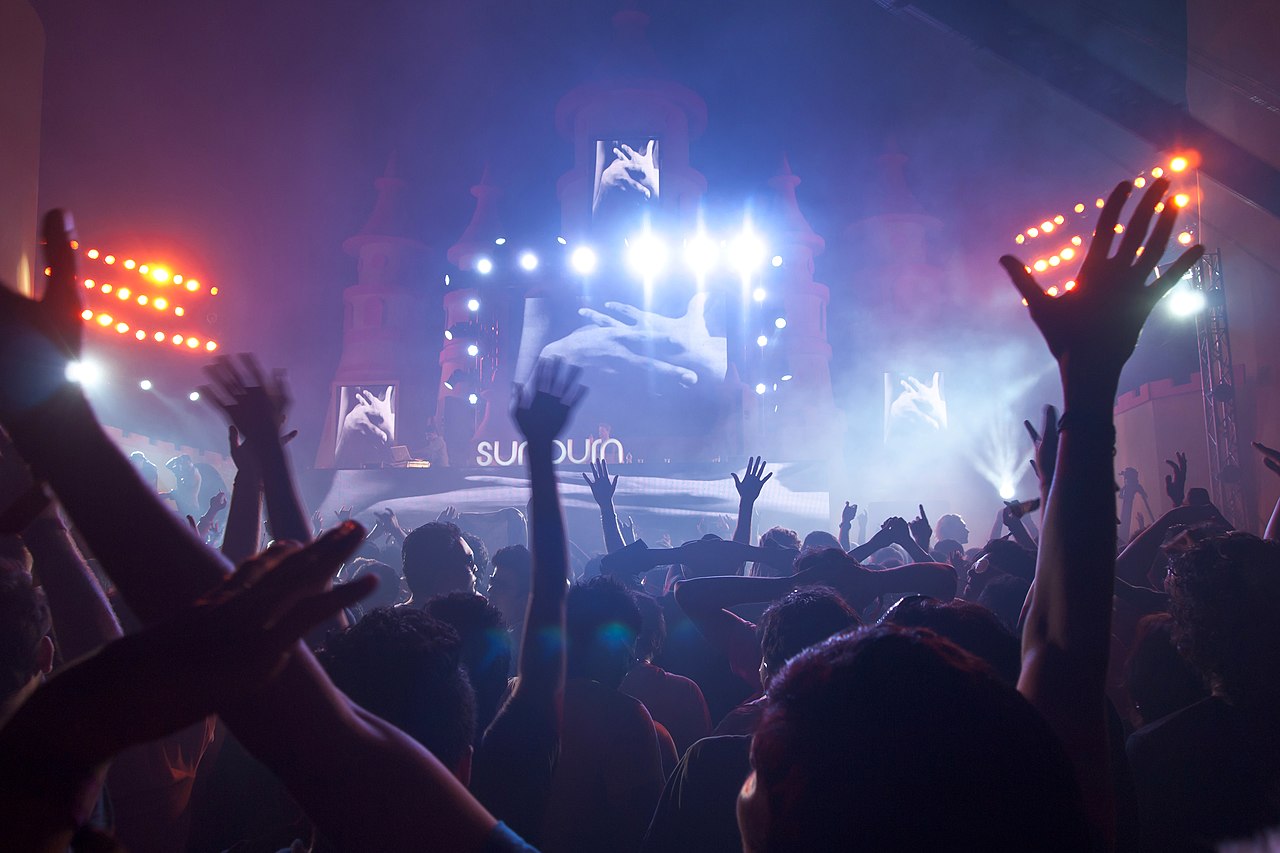
Progressive trance is the slower, more gradual branch of trance. It usually runs at about 128 to 132 BPM, its builds are long, its breakdowns are understated, and the track keeps developing from start to finish instead of saving everything for one enormous melody. Those figures and that description come from Insomniac’s guide to trance subgenres, and they match what you hear on the records.
The word “progressive” is about how the music moves. Layers enter and leave a few bars at a time, a filter opens slowly, and ten minutes later the track is somewhere quite different from where it began without ever seeming to change gear.
What it sounds like
To my ears, atmosphere does more of the work than the lead. There’s still a melody, but it tends to share the space with pads and texture instead of standing in front of them. Tracks are long because the form needs room. Sasha’s “Xpander” (1999) runs eleven and a half minutes in its full version. BT’s “Flaming June” (1997), which he wrote and produced with Paul van Dyk, runs just over nine in the original mix.
Two British labels were central to the style in the 1990s: Platipus, which Simon Berry launched in 1993, and Hooj Choons. AllMusic’s summary, quoted in Wikipedia’s trance article, is that progressive trance “became the sound of the world’s dance floors by the end of the millennium.” Long tracks are the point here, which is one reason the extended mix still matters.
How it differs from uplifting trance
Uplifting trance is the faster, bigger sibling, and the differences are easy to hear side by side.
- Tempo. Uplifting sits at about 136 to 142 BPM, progressive at 128 to 132.
- Breakdown. In uplifting trance the drums stop completely, the chords take over for a long stretch, and a snare roll brings everything back at once. In progressive trance the dip is gentler and less of an event.
- Lead. Uplifting is built around a wide, bright lead that arrives like a chorus. Progressive keeps its lead in proportion with everything else.
- Shape. Uplifting alternates between tension and release. Progressive moves in one long line.
Neither is better. Uplifting gives you a single moment to remember. Progressive gives you a mood that holds for the whole track.
How it differs from progressive house
This is the harder line to draw, because the two grew up together. The term “progressive house” is usually traced to a June 1992 Mixmag piece by Dom Phillips called “Trance-Mission”, which described a new British sound as “hard but tuneful, banging but thoughtful, uplifting and trancey”. For the first few years, people used progressive house and trance almost interchangeably.
The useful distinction is what each one keeps. Progressive house is built on rhythmic layers and tends to do without anthemic melodies, big crescendos and drum rolls. Progressive trance keeps the trance toolkit, with a breakdown, a build and a melodic payoff, and simply turns each of them down. Some records refuse to pick a side. “Xpander” is filed under both. Motorcycle’s “As the Rush Comes”, produced by Gabriel & Dresden with the singer Jes, is usually listed as progressive house and was still voted Tune of the Year 2003 on Armin van Buuren’s trance radio show.
It got more confusing in the 2010s, when “progressive house” also became the label for the mainstage festival sound of Avicii and Swedish House Mafia, while producers like Eric Prydz and deadmau5 stayed nearer the original, more atmospheric meaning. So when someone says progressive house, it’s worth asking which decade they have in mind. I’ve written about what progressive house means in my own music if you want my side of that line.
Where to start, and where my own track sits
Start with “Flaming June” and “Xpander”. Then try Lost Tribe’s “Gamemaster” and something by Markus Schulz, both of which Insomniac names as reference points for the style. Cosmic Gate are a good example of the direction of travel: they began in hard trance and moved toward a progressive sound on later albums.
My single “Beyond the Stars” is a progressive trance instrumental with a piano solo. It’s a small entry in a long tradition, and if you’d like to know the thinking behind it, I’ve explained why “Beyond the Stars” has no vocals.